
Social Media Marketing for Local Restaurants
Social media marketing for local restaurants helps owners show guests what makes a small restaurant worth visiting and plan content with purpose.

Social media marketing for local restaurants is worth the budget when it helps nearby guests understand what makes your place worth visiting. For a small restaurant, it is not about becoming famous online. It is about showing the food, the room, the people and the reasons to book before a guest chooses somewhere else.
People often meet a restaurant on a phone before they meet it at the door. They might see a friend’s tag, search for a neighbourhood, check your opening hours, or look at your latest posts before choosing a table. A clear, current social presence makes that decision easier.
For independent restaurants and cafés in London, the useful question is not “Should we be everywhere?” It is “What do we need guests to understand before they arrive?” The five reasons below turn that question into a practical plan.
Social Media Marketing for Local Restaurants Makes Your Story Visible
Social media gives a local restaurant a place to show the experience behind the name, not just list the address. A menu tells someone what is available; a good post can show the care, pace and personality they can expect from a visit.
That matters when your restaurant is one of many choices within a short walk. A quiet lunchtime room, a busy pass before service, a familiar face at the bar or the first tables being laid all help a guest picture themselves there. These details are especially useful for a new opening, a new menu or a restaurant that has changed its look.
The goal is not polished theatre every day. It is a recognisable record of your restaurant as it really is. When the online version and the real place match, guests arrive with clearer expectations.
It Helps Guests Choose You Before They Search Again
Social content helps a restaurant stay memorable between visits and gives potential guests something clear to act on. A post that shows Sunday lunch, a new sharing menu or a midweek late opening can reach someone before they begin a broad search for “restaurants near me”.
Your profile should make the next step obvious. Keep the bio, location, opening times and booking link current. If you take bookings, make the route from a post to a table as short as possible. If you offer takeaway, say where guests can find the latest details rather than leaving an old announcement in the feed.
Social media works best alongside the places where people search with intent. Google’s restaurant guidance explains that a Business Profile can show essential information, menus, photos, reservations and ordering options in Search and Maps. Keep that profile in step with your social channels, rather than treating it as a separate job. Google Business Profile’s restaurant guidance is a useful checklist for the basics.
It Builds Trust Before a First Visit
Consistent, honest content gives a guest confidence that a restaurant is active, cared for and right for the occasion. This is not a promise that every post will lead directly to a booking; it is the accumulated effect of being easy to recognise and easy to check.
Trust comes from simple details being correct. Show what the dining room looks like at the time of day you are inviting people to visit. Share a real team member with their name if they are happy to be featured. Explain a special menu plainly, including dates and booking details. Reply to questions and comments with the same care you would use at the host stand.
This is also where good photography matters. A guest should be able to see the quality and character of the restaurant without guessing. The work in our restaurant photography and video portfolio shows how a consistent visual record can make a restaurant feel familiar before a first visit.
It Gives Small Restaurants a Fairer Way to Compete
A small restaurant does not need a large audience to make social media useful. It needs to be clear and present for the people who live, work or spend time nearby.
Large groups may have more locations and more content, but an independent restaurant has a different advantage: the owner, the kitchen and the front-of-house team can show what is actually happening this week. A local event, a last-minute table, a seasonal change or a team story can be shared while it is still relevant.
Choose one main channel and make it dependable. Instagram is often a natural home for restaurant photography and short video, but do not post there simply because other restaurants do. Meta’s current guidance for Reels stresses vertical video, audio and keeping key elements in the visible safe area when a restaurant decides to promote a video. Read the official Reels advertising guide before putting spend behind a post.
It Turns Everyday Restaurant Work Into Useful Content
The best restaurant content usually begins with work already happening in the restaurant. A content plan is a short, written list of the photos, videos and updates you need over a set period. It stops the feed becoming a last-minute task at 4 pm.
Start with four simple content groups:
- Food and drink: a new dish, a seasonal ingredient or a close look at something guests ask about.
- The place: the room, a detail of the table or the change from day to evening.
- The people: the team preparing for service, welcoming guests or sharing a small piece of knowledge.
- The reason to visit now: a menu change, event, opening hours, availability or booking reminder.
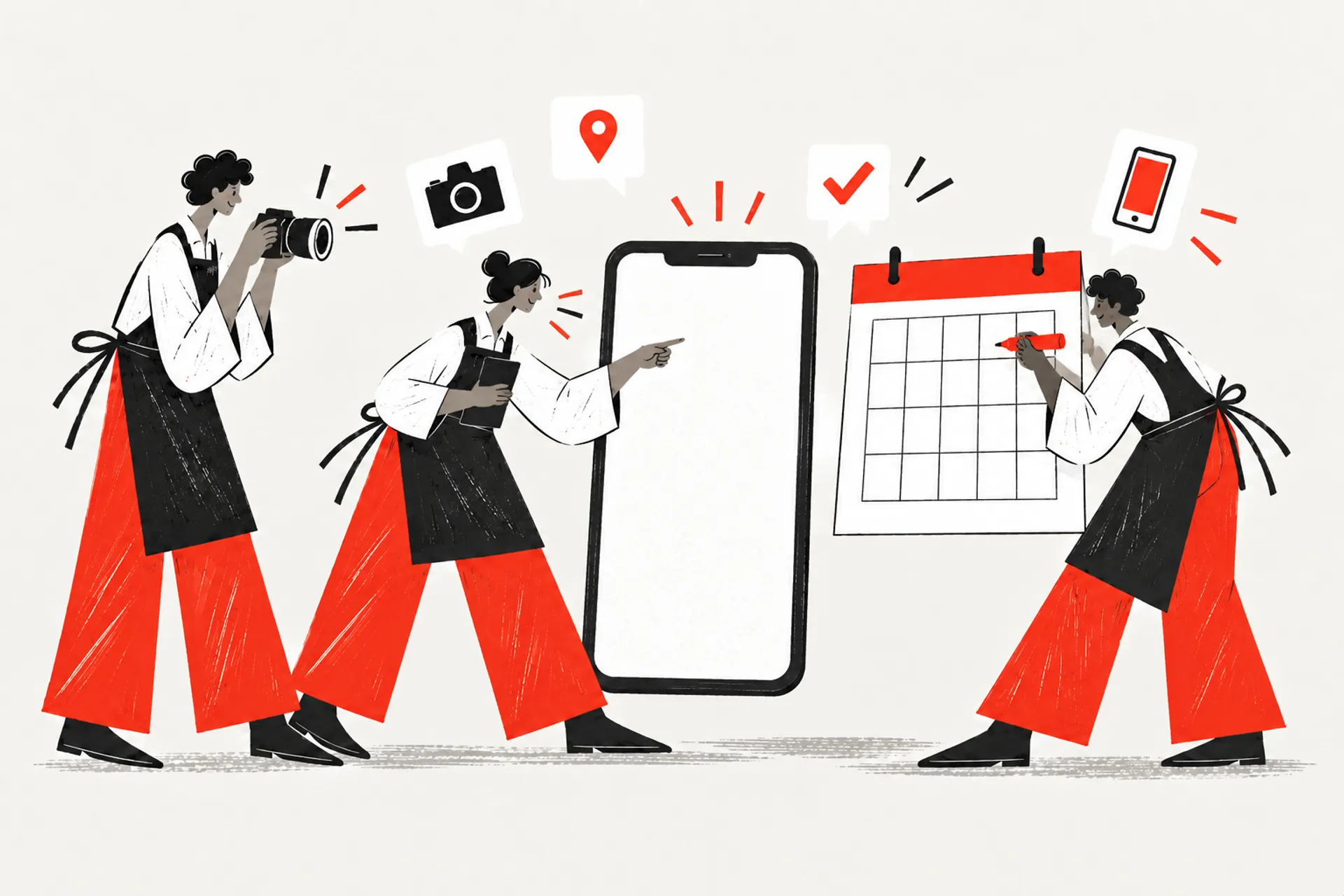
Plan around the calendar you already use. A monthly shoot can give you a small bank of photographs and video, then the restaurant team can use timely updates in between. You can also do this yourself with a phone: use daylight where possible, keep the frame simple, and only share what a guest would genuinely find useful.
How Much Time and Budget Should a Small Restaurant Set Aside?
Set aside enough time and budget to be consistent, not enough to fill every channel. One focused shoot and a simple monthly plan often gives a small restaurant more usable material than trying to create something new every day.
Before you spend anything, decide what the content should help with. It may be more bookings on quieter nights, a clearer launch for a new menu, stronger recognition in a neighbourhood, or a fresher set of images for your Google profile. Pick one main aim for the next three months and judge the work against that aim.
Then track signals that match the aim: booking-link visits, direct messages about a specific event, calls, enquiries or the posts guests mention in person. Avoid judging the whole effort by likes alone. They can be useful feedback, but they do not explain whether the right local guests are choosing to visit.
If your restaurant also needs an easier route from content to action, a current menu, booking page or loyalty card can help connect those moments. Explore TeoPix’s digital tools for restaurants when the next step needs to happen on a guest’s phone.
How TeoPix Plans Restaurant Social Media
TeoPix Creative treats restaurant social media as an ongoing record of a real place, planned around the menu and the calendar. Our Creative Team partnership combines regular photo and video shoots with shooting, editing and posting, so the person creating the content gets to know the restaurant over time.
For a restaurant that needs a single refresh, a Shoot Day can cover the food, drinks, room and people needed for a new menu, opening or renewed feed. The finished material is then ready to use across social posts, Google and other guest-facing pages. See the two ways to work together on our restaurant creative services.
The important part is the plan before the camera comes out. Agree what guests need to see, which dates matter, who can appear on camera and where a post should lead. That keeps the content useful for the restaurant team as well as attractive to guests.
Start With One Clear Reason to Be Seen
Social media marketing is a practical part of local restaurant marketing when it makes your restaurant easier to recognise, trust and choose. Start with one channel, a current profile, a short content plan and a booking or menu link that works.
Give guests a clear picture of what is happening in your restaurant this week, then keep showing up with the same honest standard. If you would like a hand with the photography, video or planning behind it, let’s talk.
Frequently asked questions
Is social media worth it for a small local restaurant?
Yes, social media is worth it when it gives local guests a clear reason to visit, order or book. A small restaurant does not need to post every day or chase large follower numbers. It needs a reliable way to show the food, the room, the people and the current reasons to come in.
Which social media platform should a local restaurant use?
Start with the platform your guests already use and where you can keep a profile current. For many London restaurants, Instagram is a useful visual home, while Google Business Profile supports people who are actively looking for a place to eat. Add another platform only when you can maintain it well.
How often should a restaurant post on social media?
A restaurant should post as often as it can stay useful and consistent. One well-planned post or short video each week, supported by timely stories or updates, is more valuable than a busy fortnight followed by silence. Build a rhythm around menu changes, service and events.
What should a restaurant post if it has no new menu?
A restaurant can post the people, atmosphere and routines that make the place familiar: preparation before service, a team member, a regular corner of the room, a supplier delivery, an upcoming evening or a guest question answered clearly. The aim is to show the experience, not only announce a new dish.